Jonathan Rajewski &Kyle Daniel-Bey

Detroit, Michigan

Project Overview

Entry Points is a re-entry artist residency that offers housing, studio space, and support to returning citizens who were unconstitutionally sentenced to mandatory life without parole as juveniles in Michigan, allowing participants to not only transition to life outside, but also maintain their developed identity as artists.

Five Questions

1What needs does Entry Points address and how?

Entry Points is a project that responds to the needs of returning juvenile lifers. Because Michigan has the second highest juvenile lifer population in the U.S., and because those sentences are now unconstitutional, re-sentencing hearings have been underway since 2015 and people are coming home, often without support.

Entry Points is a re-entry artist residency for returning citizens, sentenced to mandatory life without parole as juveniles, without accessible housing or income, to live and work as artists and writers while they transition to life outside. While in residence, opportunities and re-entry support will be provided by a convergence of activists, educators, artists, and writers in our existing network to support their transition.

During their residency, housing costs and utilities will be covered and an honorarium will be provided to cover studio materials. Opportunities to publicly present work, or to produce a text, at the end of the residency is made available to each resident.

2Tell us about a moment that helped inspire your idea.

Entry Points surfaced out of urgency, not ideation. In 2022, when artist, writer and juvenile lifer James D. Fuson was resentenced after thirty years behind bars, he had no viable housing option available to him. In response to his need, the Entry Points artist-in-residence program emerged.

3What is the biggest challenge you face right now?

Discrimination and stigma, unwilling landlords and public housing exclusions in Michigan prevent a substantial number of adults with conviction histories from finding stable housing. It is well evidenced that a lack of stable housing is a major causal engine for recidivism. Because Michigan has the second highest juvenile lifer population in the U.S., and because those sentences are now unconstitutional, re-sentencing hearings have been underway since 2015 and people are coming home, often without support.

Entry Points emerged in response to the urgent and unique needs of Michigan's juvenile lifer population by supporting re-entry through free housing and space for continued cultivation of their creative practices.

4What other leaders have informed your work?

We are influenced by the thinking of abolitionists, among them Angela Davis and her text "Are Prisons Obsolete?" (Seven Stories Press, 2003). We regard mass-de-incarceration not merely as a dismantling practice but as a process of imagining new thinking frameworks and ways of being together, for one another. Our work is further influenced and energized by the ideas of Stefano Harney and Fred Moten's collaborative work, "The Undercommons: Fugitive Planning & Black Study," (Minor Compositions, 2013), particularly their ideas on credit/debt, study, and the general antagonism. We are influenced by one another, our lived experiences, our highs and lows. Our work necessitates the input and collaboration of systems-impacted voices.

The poet Audre Lorde said that “...poetry is not a luxury. It is a vital necessity of our existence. It forms the quality of the light within which we predicate our hopes and dreams toward survival and change, first made into language, then into idea, then into more tangible action.” Our work is energized by the deeply felt experience of witnessing the power of art within the realm of action-oriented social justice.

5Describe a participant, client, community member, or someone else who represents what your project is all about.

Our first resident was juvenile lifer James D. Fuson. James was sentenced to mandatory life without parole in 1994, at the age of 16, a sentence that was later determined to be unconstitutional. On his release day in 2022, we commuted James from the Macomb Regional Correctional Facility to Entry Points, where he lived for twelve months while transitioning to life outside. Working collaboratively, Entry Points supported James in finding immediate full time employment, transportation to parole reporting, and aided his efforts to apply for a Kresge Arts in Detroit Fellowship in Literary Arts, an unrestricted grant of $25,000 that he received in 2023 to support his writing practice.

Meet our other 2025 awardees

Karina Ambartsoumian-Clough

United Stateless

New Jersey, Operating Nationally

United Stateless redefines social justice by centering the leadership of stateless people themselves, creating a groundbreaking model of self-advocacy and systemic change for a population long excluded from legal recognition and public discourse.

Learn More

Manuel Benitez Ruiz

Plantaer

New York, Operating Nationally

Plantaer creates biocompatible, cement-free materials that integrate plant life into urban infrastructure to cool buildings, purify air, capture carbon, and deliver exceptional durability.
Learn More

Catherine Casomar &Sarah Friedman

Better Data Center Project

Washington, D.C., Operating Nationally

The Better Data Center Project works in solidarity with communities on the front lines of data center development to realize fair and just distribution of economic, social, and environmental costs and benefits.
Learn More

Chief Justice Sue Bell Cobb

Redemption Earned

Alabama

Redemption Earned is a nonprofit law firm that provides free legal and reentry services to elderly, critically ill, and infirm people in Alabama’s prisons, prioritizing public safety while addressing fundamental deficiencies in the state’s parole process.
Learn More

Sarah Kills In Water &Rhea Waldman

South Dakota Native Tourism Alliance

South Dakota

The South Dakota Native Tourism Alliance is reclaiming tourism as an engine of Indigenous economic power and cultural resurgence—empowering Native youth to lead, innovate, and thrive in a future where their communities own both their stories and their success.

Learn More

Greg Miller

Center for Land Economics

Washington, D.C., Operating Nationally

The Center for Land Economics is a national coordinating body for land value tax reform, combining technical assistance to local governments, open-source research and software, and a national action network to unlock affordable housing, reduce inequality, and promote sustainable development.

Learn More

Sanjana Paul

Rooted Futures Lab

Massachusetts, Operating Globally

Rooted Futures Lab transforms the teaching, design, and deployment of science and technology by embedding environmental justice at their core to confront systemic social and ecological harm.

Learn More

Dena Stanley

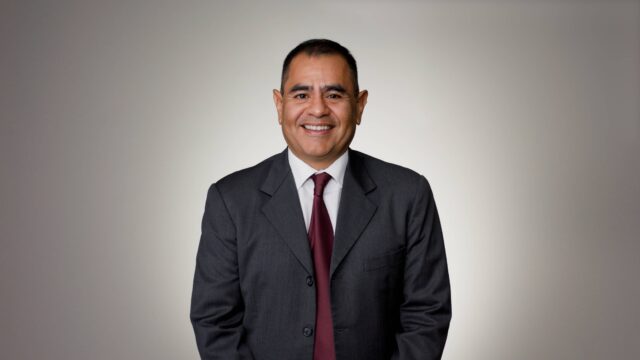
TransYOUniting

Pittsburgh, Pennsylvania

The QMNTY Continuum is a grassroots, community-led model created by TransYOUniting and Proud Haven that delivers wraparound care for Black trans and TLGBQIA+ people through affirming shelter, essential services, civic engagement, and cultural connection in Pittsburgh’s inner city.
Learn More

Jesus Torres

Unmio

California, Operating Nationally

Unmio is a privacy-first digital platform for vulnerable communities and the organizations that serve them to safely communicate, coordinate services, and exchange sensitive information, without fear of surveillance or exploitation.

Learn More